Armco Explained: From the History to its Applications
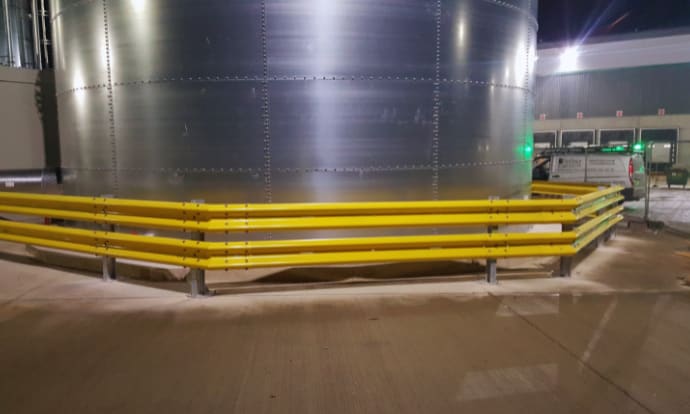
In this blog, we explore the origins of Armco safety barriers, their development over the years, and the many ways they are used in modern environments.
What Does Armco Stand For?
The name “Armco” originally comes from the American Rolling Mill Company, a steel manufacturer founded in the United States in the early 1900s. The company became known for producing durable corrugated steel products, and over time, the term “Armco” became commonly associated with steel crash barriers and safety rails.
The distinctive corrugated profile of Armco rails was developed to improve strength and impact absorption. Rather than resisting collisions with a completely rigid structure, the curved steel design helps distribute and absorb force across the barrier. This innovation quickly made Armco systems a popular choice for roadside protection and industrial safety.
As vehicle traffic increased throughout the mid-20th century, Armco barriers became widely used on roads, in car parks, and across industrial sites to reduce damage and improve safety in high-risk areas.
The History of Armco: Installed at F1 Tracks
One of the most notable moments in the history of Armco barriers came during the rise of modern motorsport safety in the 1960s. As Formula 1 circuits became faster and more dangerous, traditional trackside protections such as straw bales and earth banks were no longer considered sufficient.
Armco crash barriers began appearing around racetracks to help absorb the force of high-speed collisions and reduce the severity of accidents for drivers and spectators alike. Their introduction marked a major step forward in circuit safety and helped establish steel crash barriers as a trusted form of impact protection across both motorsport and public infrastructure.
Why Corrugated Steel Became the Industry Standard
One of the key reasons Armco barriers became so successful is the design of the steel rails themselves. Armco corrugated rails are manufactured from high-quality galvanised steel and shaped with a wave-like profile for additional strength.
This design allows the barrier to absorb and spread the force of an impact more effectively than flat steel alternatives. The galvanised zinc coating also protects the steel against rust and corrosion, making Armco systems suitable for both indoor and outdoor environments.
Modern Armco barriers continue to meet strict safety and quality standards, including BS EN 10025 grade S275 steel requirements. Available in both 1.6m and 3.2m lengths, these barriers provide flexible protection solutions for sites of all sizes.
For businesses looking to improve visibility, powder-coated finishes are also available in bright colours such as yellow or black. These finishes not only make the barriers easier to spot in busy environments but also provide additional resistance against weathering and wear.
The Evolution of Armco Systems
While the original Armco barrier was relatively simple, modern systems have evolved significantly to meet the changing demands of industrial and commercial environments.
Today’s Armco systems include a wide range of components and accessories designed to create tailored safety solutions for different sites and hazards.
Why Armco Remains Popular Today
Despite the development of newer safety technologies, Armco barriers remain one of the most trusted and widely used protection systems available. Their popularity comes down to several key advantages:
- Exceptional strength and durability
- Reliable impact protection
- Long lifespan with minimal maintenance
- Flexible configurations for different environments
- Cost-effective safety solution
- Easy installation and expansion
- High visibility options available
Modern Armco systems continue to evolve, offering businesses even greater levels of safety, adaptability, and performance.
Build Your Armco System
First Fence is proud to be an Armco barriers supplier, and if you have any questions, our friendly team of experts is happy to help. Contact us by:
- Phone on 01283 512 111
- Email at sales@firstfence.co.uk
- Live chat on our website
We can also help set up a flexible finance payment to spread the cost and suit your budget.