Sliding Gates vs LPS 1175 Security-Rated Sliding Gates: Which Is Right for Your Site?
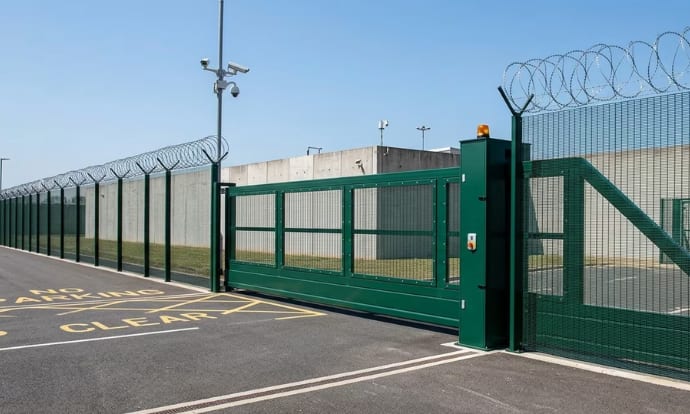
While both systems provide automated access control and robust perimeter protection, there are significant differences in their design, performance, and security capabilities.
Standard Automatic Sliding Gates
Automatic sliding gates are a versatile and cost-effective solution for securing a wide range of properties. Designed to provide controlled access for vehicles and pedestrians, they are commonly installed at residential developments, schools, commercial premises, industrial estates, warehouses, and public sector facilities.
Manufactured from high-quality steel and powered by heavy-duty motors, these gates deliver reliable operation while helping to manage traffic flow and improve site security.
Available in widths ranging from 3.0m to 12.0m, sliding gate systems can accommodate everything from residential driveways to busy industrial entrances used by HGVs and construction vehicles.
Cantilever vs Tracked Sliding Gates
Automatic sliding gates are typically available in two operating styles:
Cantilever Sliding Gates
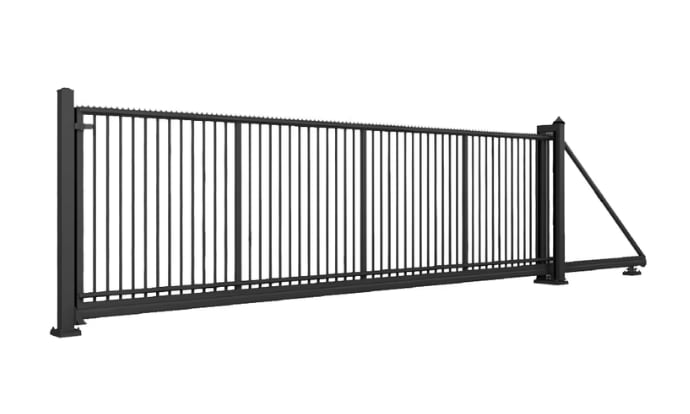
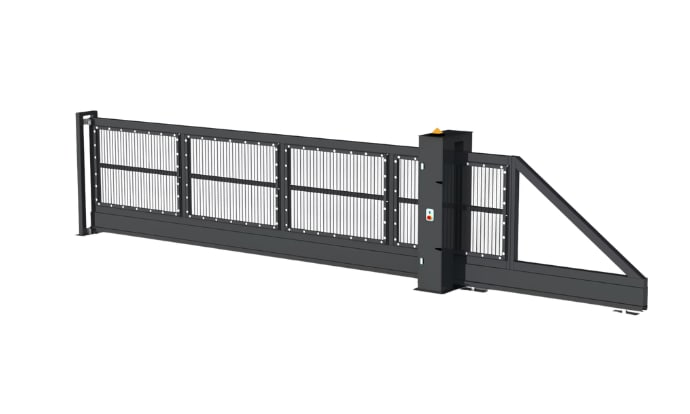
Cantilever gates operate without a ground track, instead using a counterbalanced design that allows the gate to glide smoothly above the ground. This makes them ideal for sites with uneven surfaces or areas prone to dirt, snow, leaves, or debris.
Key benefits include:
- No ground track to maintain
- Reliable operation in challenging environments
- Reduced maintenance requirements
- Ideal for industrial and commercial sites
Tracked Sliding Gates
Tracked sliding gates run along a level ground track and are often selected where available run-back space is limited or where particularly large gate openings are required.
Key benefits include:
- Suitable for wider and taller gate designs
- Space-efficient operation
- Cost-effective solution for larger entrances
- Smooth and consistent movement
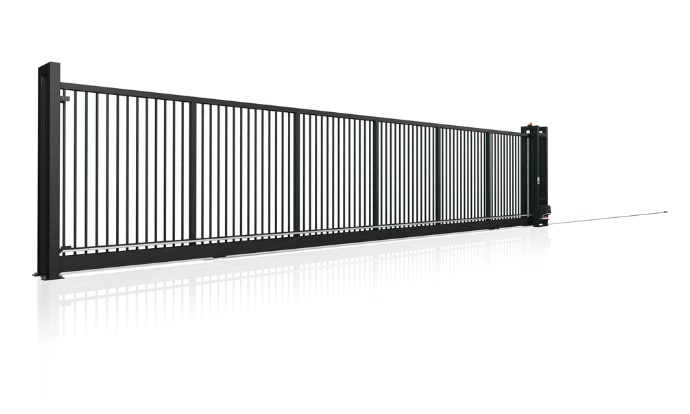
Standard automatic sliding gates are suitable for:
- Residential driveways
- Business parks and office developments
- Warehouses and logistics centres
- Schools, colleges, and universities
- Industrial estates
- Utility compounds
- Public sector facilities
LPS 1175 Security-Rated Sliding Gates
For sites where security threats extend beyond opportunistic trespassing, LPS 1175 security-rated sliding gates provide a significantly higher level of protection.
Unlike conventional automated gates, LPS 1175 gates undergo independent attack testing by the Loss Prevention Certification Board (LPCB). These tests are designed to measure how effectively a gate can resist deliberate forced entry attempts using a range of tools.
The objective is not to make a site impenetrable but to delay attackers long enough for security personnel, monitoring teams, or emergency services to respond.
Understanding Security Ratings
SR1 (A1)
SR1 gates are designed to resist opportunistic attacks using basic hand tools such as screwdrivers, pliers, and small bolt cutters. Tested to withstand attack for at least one minute, they provide an effective deterrent for lower-risk commercial environments.
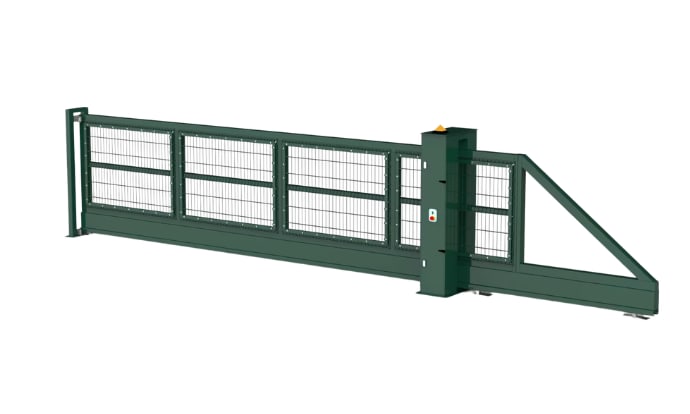
SR2 (B3)
SR2 gates are engineered for higher-risk sites and are tested against more determined attacks involving crowbars, hacksaws, and hand drills. They are certified to resist forced-entry attempts for at least 3 minutes, providing enhanced protection for critical facilities.
Typical Applications
LPS 1175 SR1 and SR2 gates are commonly installed at:
- Data centres
- Utility facilities
- Government buildings
- Military sites
- Critical National Infrastructure (CNI)
- High-value distribution centres
- Secure logistics hubs
- Sensitive industrial facilities
Additional Security Features
LPS-rated gates combine certified security performance with the benefits of automated operation, including:
- Heavy-duty steel construction
- High-performance automation systems
- Fast opening and closing speeds
- Integrated safety edges and photocells
- Emergency stop functionality
- Bespoke sizing for a precise site-specific fit
Which Gate Should You Choose?
For most residential, commercial, educational, and industrial applications, a standard automatic sliding gate provides an excellent balance of security, convenience, and value. With a choice of cantilever or tracked systems and multiple infill options available, these gates can be tailored to suit a wide range of environments.
However, where facilities face elevated security risks or require independently tested perimeter protection, an LPS 1175 SR1 or SR2 security-rated gate offers a substantially higher level of defence. Combined with high-security infill such as 358 mesh or palisade, these systems help protect critical assets and delay determined intrusion attempts.
Ultimately, the right solution depends on your site's operational requirements, risk profile, and desired level of security. By selecting the appropriate gate type and infill combination, you can create an access control solution that balances security, functionality, and long-term reliability.
Contact Us
If you would like more information or need to discuss your next project, don't hesitate to get in touch with us. We are available by:
- Phone on 01283 512 111
- Email at sales@firstfence.co.uk
- Live chat on our website