How Can I Use Railway Sleepers in Agricultural Settings?
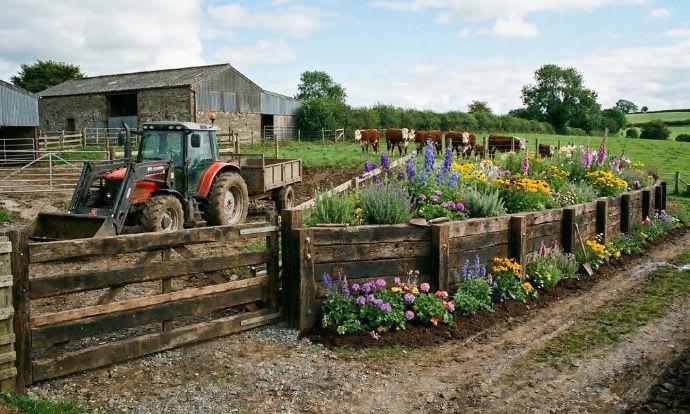
Upgrade your Rural Space
What Are Timber Sleepers?
Timber sleepers, also known as railway sleepers or wooden sleepers, are robust rectangular timber beams traditionally used in railway construction. Their strength, durability and ability to withstand outdoor conditions have made them a popular material beyond railways.
Today, timber sleepers are widely used in agricultural and rural environments for a variety of structural and landscaping purposes.
What Are the Benefits of Using Timber Sleepers?
Once treated, timber sleepers are highly durable and resistant to decay and weathering, making them ideal for long-term outdoor use in agricultural environments.
They are also a cost-effective solution compared to many alternative materials and are relatively easy to install, repair or replace if needed. Their solid construction makes them suitable for projects that require strength, stability and longevity.
Uses for Railway Sleepers
- Livestock Pen Edging: Timber sleepers can be used to create strong boundaries and edging for livestock pens, helping to maintain clear divisions between areas while providing a sturdy barrier.
- Field and Yard Retaining Walls: Sleepers are commonly used to build retaining walls for farmyards, tracks and field edges where ground levels need to be stabilised or supported.
- Raised Planting Beds for Market Gardens: For smallholdings, market gardens or farm diversification projects, sleepers are ideal for constructing raised beds for growing vegetables, herbs or flowers.
- Farm Track and Gateway Edging: Sleepers can be installed along farm tracks and gateways to reinforce edges and prevent erosion caused by vehicles, livestock or heavy rainfall.
- Agricultural Steps and Access Points: Where land slopes or banks are present, sleepers can be used to construct durable steps, making access safer for workers moving between different field levels or areas of the farm.
- Equipment and Storage Areas: Sleepers can be used to create defined areas for machinery storage, feed bays or general farm organisation.
- Walkways and Access Paths: Installed either horizontally or vertically, sleepers can create solid pathways in high-traffic areas such as livestock yards, barns or field entrances.
- Equestrian Applications: On equestrian properties, timber sleepers are often used for arena edging, mounting blocks, retaining banks or stable yard landscaping.
How to install railway sleepers for a garden retaining wall
- Measuring the Area: Start by marking out the space where your railway sleepers will be installed to ensure accuracy.
- Digging the Post Holes: Create secure foundations by digging holes for the sleeper posts.
- Depth Check: Measure the depth of the holes to ensure they’re the right size for your posts.
- Installing the Posts: Position your posts and check they align correctly with the sleeper layout.
- Securing the Posts: Use post mix to firmly secure the posts in place.
- Adding the wooden sleepers: Attach the sleepers to complete the installation.
How to Cut Railway Sleepers Safely
Before you start cutting timber sleepers, ensure you have the correct PPE to protect yourself from harm. This can include, but is not limited to, goggles, a dust mask, ear defenders, and gloves.
Also, before you cut the wood, make sure you follow the sage advice of: measure twice, cut once. A sleeper can be made shorter, but not longer, if the measurement was off.
Using the correct power tools, such as a circular saw or a reciprocating saw, can help ensure a clean cut. Please note that splinters can still happen, so carefully handle sleepers with protective clothing.
How Do I Maintain Timber Sleepers?
Once treated, timber sleepers require minimal maintenance. Regular inspections should be carried out to check for signs of damage, wear or movement, particularly in high-traffic agricultural areas.
Keeping sleepers free from excessive soil build-up and debris will help maintain their condition and extend their lifespan.
When sleepers are installed in contact with soil or other moisture-holding materials, it is recommended to use a protective barrier such as a damp-proof membrane (DPM). This helps slow the natural decay process and prolongs the life of the timber.
What are the Regulations for Treated Timber Sleepers?
With the move away from traditional creosote treatments, more environmentally friendly timber preservatives are commonly used to maintain sleepers. Products such as Creosolve are available in dark and light brown finishes and help protect timber from moisture and weather exposure. Treated sleepers must comply with BS 8417 (the British Standard for the preservation of wood) and BS EN 335.
Contact Us
If you have any questions or need advice, please contact us. We are available by phone on 01283 512 111, email sales@firstfence.co.uk, or connect via live chat for more information.