A Guide to Scaffold Sheeting, Debris Netting, and Barriers

Each of these solutions plays a distinct role in improving site safety, protecting workers and the public, and maintaining productivity in challenging conditions. This guide explains how each product works, when it should be used, and the benefits it provides on-site.
Why Scaffold Protection Systems Are Important
Construction sites present a range of risks due to their dynamic and open nature. Without suitable containment measures, hazards such as falling materials, adverse weather, dust, noise, and unauthorised access can quickly compromise safety and efficiency.
Integrating scaffold sheeting, debris netting, and barriers helps to:
- Reduce the risk of falling objects
- Improve safety for workers and pedestrians
- Protect against wind and rain
- Help control dust and debris spread
- Secure and define site boundaries
These systems also support regulatory compliance and contribute to smoother site operations.
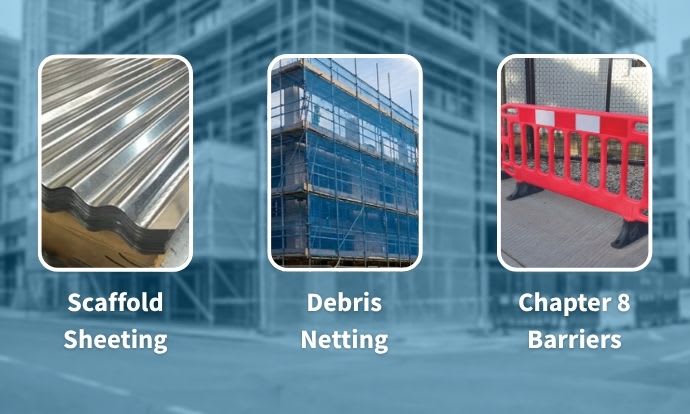
Corrugated Galvanised Steel Sheeting: Durable Weather Protection
Corrugated galvanised steel sheeting, commonly used for temporary roofing, provides robust protection for scaffold structures. Its strength, durability, and lightweight design make it suitable for demanding site conditions.
Key Benefits
- Strength and durability: Manufactured from galvanised steel, these sheets are designed to withstand harsh working environments. The corrugated profile enhances structural strength while maintaining manageable weight.
- Effective weather protection: The profile assists with efficient water run-off, helping to prevent pooling and reduce weather-related disruption.
- Corrosion resistance: A protective zinc coating improves resistance to rust and corrosion, extending product lifespan and reducing maintenance requirements.
- Ease of installation: Sheets are lightweight, easy to handle, and can be cut and fixed quickly on site.
- Cost efficiency: Their durability and low maintenance requirements make them a practical long-term solution for temporary roofing applications.
Typical Applications
- Temporary roofing on scaffold structures
- Sites exposed to severe or prolonged weather conditions
- Projects requiring extended scaffold protection
- Industrial, agricultural, and construction environments
Debris Netting: Lightweight Fall Protection
Debris netting is a strong, lightweight mesh system installed on scaffolding to help contain falling materials and improve overall site safety.
Key Benefits
- Prevents falling debris: Captures tools, materials, and waste before they leave the scaffold structure.
- Protects the public: Reduces risk to pedestrians and surrounding properties, particularly in busy or urban areas.
- Maintains airflow and visibility: Unlike solid sheeting, netting allows light and air to pass through while still providing a protective barrier.
- Cost-effective safety solution: Provides a practical and economical method of improving site containment.
Typical Applications
- High-rise or multi-level scaffolding
- Public-facing or high-traffic locations
- Demolition or refurbishment projects
- Work involving loose or lightweight materials
Barriers: Site Access Control and Perimeter Management
Chapter 8 Barriers are used at ground level to define boundaries, control movement, and restrict unauthorised access to hazardous areas.
Key Benefits
- Clear site demarcation: Establishes a visible perimeter separating work areas from public access zones.
- Traffic and pedestrian management: Helps guide safe movement around active construction areas.
- Improved safety control: Reduces the risk of accidental entry into hazardous zones.
- High visibility: Many systems include reflective features to improve visibility in low-light conditions.
Typical Applications
- Around scaffold base areas
- Roadside and public-facing works
- Site entrances and access points
- Temporary works and event management
Selecting the Right Combination
The most effective approach often involves using scaffold sheeting, debris netting, and barriers together as part of an integrated site safety strategy.
- Sheeting and netting: Suitable for containment and weather protection
- Netting and barriers: Effective for public-facing environments
- All three systems combined: Recommended for high-risk, exposed, or residential sites
The appropriate combination will depend on project type, location, and risk assessment requirements.
Best Practice for Installation & Maintenance
To ensure optimal performance and safety, the following practices are recommended:
- Ensure all materials are correctly installed and securely fixed
- Inspect systems regularly throughout the project duration
- Replace damaged or worn components promptly
- Use materials appropriate for site conditions and reuse where suitable
- Follow relevant UK safety regulations and site risk assessments
- Provide training for correct installation and handling procedures
Summary
Scaffold sheeting, debris netting, and barriers are essential components of a safe and controlled construction environment. When correctly specified and installed, they reduce risk, improve working conditions, and support efficient project delivery.
Whether for small-scale refurbishment or large commercial construction, integrating these systems helps maintain high safety standards while protecting both personnel and the public.
Need Advice?
If you have any questions or would like support selecting the right products for your project, please contact our team:
- Call: 01283 512 111
- Email: sales@firstfence.co.uk
- Live chat available
You can also ask us about opening a trade account and our delivery options.